
IRS Notices
How to Tell if an IRS Letter Is Real: Genuine Notices vs. Scams (2026)
The short answer: to tell if an IRS letter is real, check that it arrived by U.S. mail, shows a CP or LT notice number you can match on IRS.gov, names a specific tax year and amount, and only asks you to pay the United States Treasury. Anything demanding gift cards, wire transfers, or instant payment is a scam.
⏱ Before you pay anything: take 10 minutes to verify the balance in your IRS online account. If a real notice has a "respond by" date, that deadline is usually 21 to 30 days from the notice date — enough time to confirm it's genuine before acting.
Why this matters right now
If you're holding a letter and wondering how to tell if an IRS letter is real, you're asking exactly the right question. Tax scams cost people thousands every year, and the fakes have gotten good — official-looking logos, real-sounding notice codes, even fake "case numbers." At the same time, real IRS notices are easy to ignore out of fear, which only makes the problem grow.
The good news: there's a short, reliable checklist that separates a genuine IRS letter from a scam. You don't need to guess, and you should never pay a cent until you've run through it.
Signs an IRS letter is real
Genuine IRS correspondence has a consistent fingerprint. Look for these:
- It came by U.S. mail. The IRS starts almost every case with a paper letter. It does not open contact by email, text message, or social media.
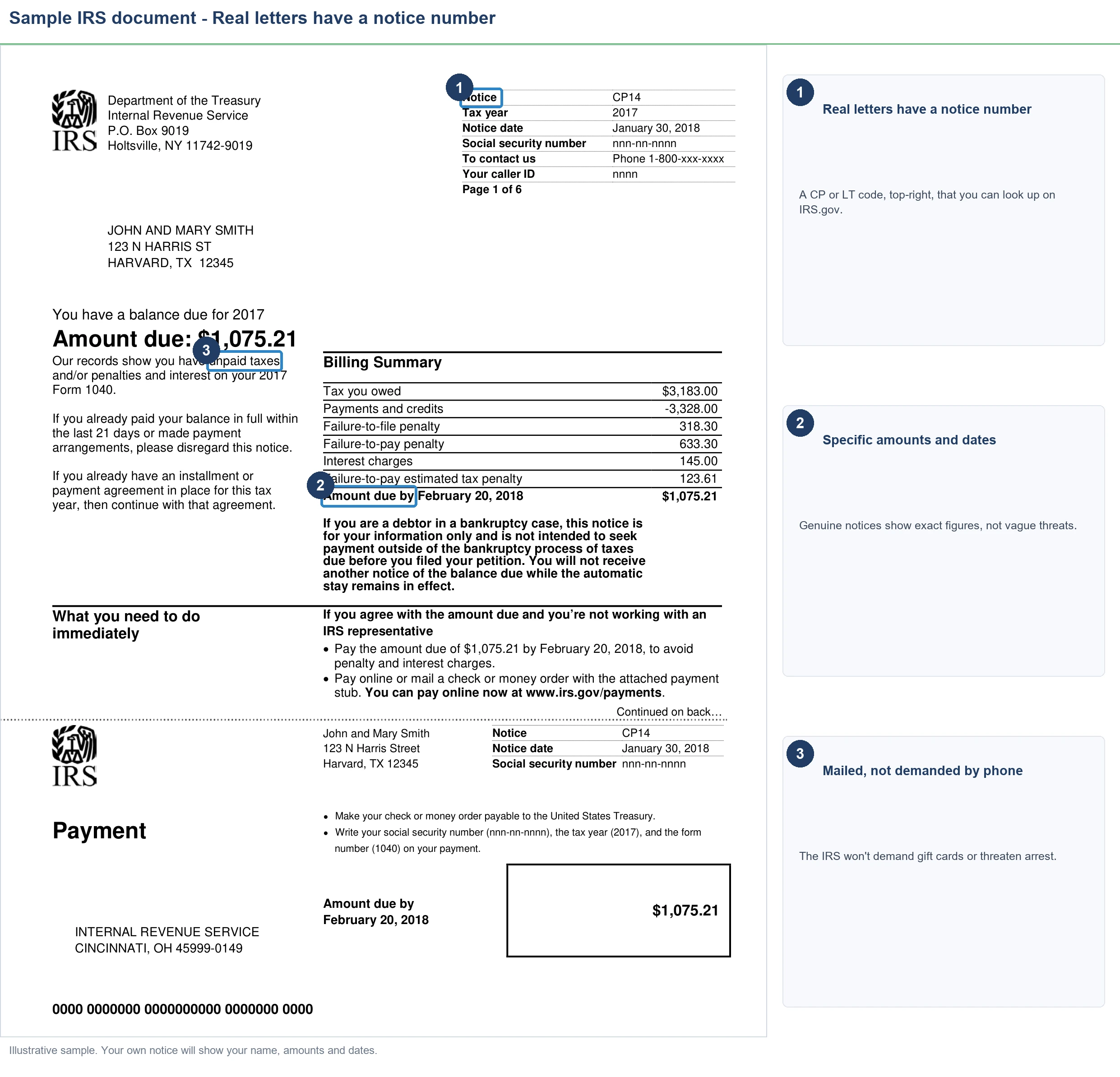
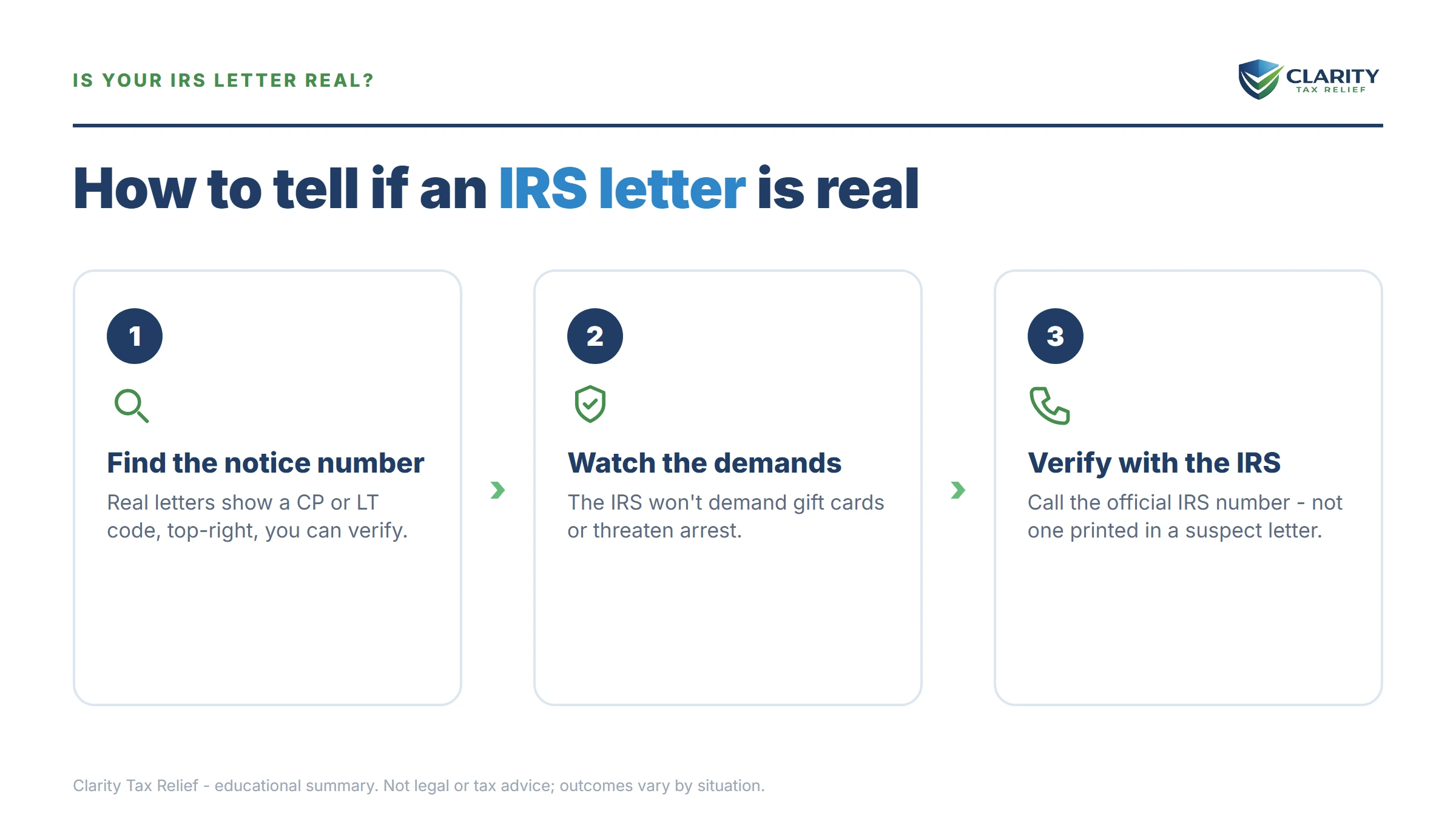
- It has a notice or letter number. Look in the top or bottom right corner for a code like CP14, CP2000, CP504, or LT11. You can search that exact code on IRS.gov and find an official page explaining it.
- It names a specific tax year and amount. Real notices reference a return you actually filed and break down tax, penalties, and interest.
- Payment goes only to the U.S. Treasury. Checks are payable to "United States Treasury," or you pay online at IRS.gov/payments.
- It explains your rights. Real notices tell you how to appeal or respond and point to the Taxpayer Advocate Service for help.
Want to decode a specific letter? Our guide on why you got a letter from the IRS walks through the most common notices and what each one means.
Red flags of a fake IRS letter or scam
Scammers copy the IRS look but slip up on the details. Treat any of these as a stop sign:
- Unusual payment methods. The IRS never asks for gift cards, prepaid debit cards, wire transfers, cryptocurrency, or payment apps. Ever.
- Threats and urgency. Real notices give you weeks to respond. "Pay within 24 hours or be arrested" is a scam. The IRS does not threaten to send police, revoke your license, or deport you.
- A phone number or link not on IRS.gov. Scam letters push you to call a number or visit a site they control. Always look up the contact details yourself.
- Requests for full personal data by reply. The IRS already has your Social Security number. It won't ask you to "confirm" your full SSN, bank login, or PIN in an email or text.
- Sloppy details. Misspellings, odd grammar, a fake "department" name, or a tax year that doesn't match anything you filed.
What happens if you act on a fake letter
Scams are designed to make you skip the verification step. Here's how the damage usually unfolds when someone doesn't:
- The hook — a scary letter or follow-up call claims you owe money "immediately."
- The pressure — threats of arrest, garnishment, or deportation push you to act before you think.
- The ask — you're told to pay by gift card, wire, or app, or to "verify" your bank and Social Security details.
- The loss — once money is wired or a card code is read aloud, it's gone, and any personal data you shared can fuel identity theft.
Every one of those steps depends on you not checking IRS.gov first. That single habit shuts the whole scam down.
How to verify an IRS letter, step by step
- Don't pay or call yet. No legitimate IRS deadline is so tight that you can't take a few minutes to confirm.
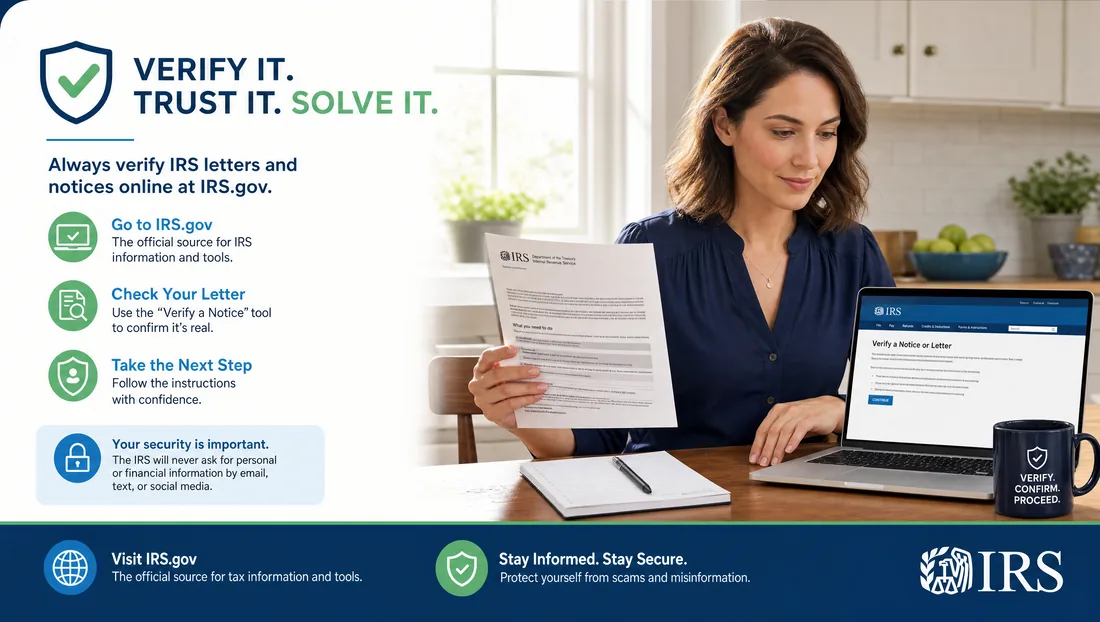
- Log into your IRS online account. Check whether the same balance, notice, and tax year appear there. If the letter is real, it almost always shows up in your account.
- Match the notice number. Find the CP or LT code and search it on IRS.gov. If there's no such notice — or the official page describes something totally different — be suspicious.
- Call the IRS directly. Use the phone number listed on IRS.gov, not the one printed in a letter you can't verify. Ask whether the notice is on your account.
- Report a suspected scam. Forward phishing emails to phishing@irs.gov and report fake letters or calls to the Treasury Inspector General for Tax Administration.
If the letter is real, don't panic — most notices are routine bills, not emergencies. For example, a CP14 notice is simply the IRS's first bill for unpaid taxes, and you have options even if you can't pay in full.
Not sure if your letter is real?
Send us a photo. An experienced tax professional will tell you whether it's genuine, what it means, and exactly what to do next — free, confidential, no pressure.
Real IRS letter, real questions — answered
Does the IRS ever contact you by email, text, or phone?
For first contact, no. The IRS starts almost every case with a paper letter sent by U.S. mail. It will not email, text, or message you on social media to ask for money or personal information. The IRS also won't make the first contact by phone or leave threatening voicemails demanding immediate payment.
How can I verify an IRS letter is real?
Log into your account at IRS.gov and check whether the same balance, notice, and tax year appear there. Real notices usually show a CP or LT number in the top corner that matches an official page on IRS.gov. You can also call the IRS directly at the number on IRS.gov — never a number printed only in the letter.
What are the biggest signs of a fake IRS letter?
Demands for gift cards, wire transfers, cryptocurrency, or payment apps; threats of immediate arrest or deportation; a phone number or web link that isn't on IRS.gov; pressure to act within hours; and requests for full Social Security or bank numbers by reply. Real IRS payments go only to the United States Treasury.
Can a real IRS letter come by certified mail?
Yes. The IRS sends certain notices — like a Final Notice of Intent to Levy — by certified mail because the law requires proof you received it. Certified mail from the IRS is real and important, not automatically a scam. Open it, note the deadline, and verify the balance in your IRS online account.
What should I do if I think an IRS letter is a scam?
Don't pay, don't call the number in the letter, and don't share personal information. Verify the balance in your IRS online account first. Report suspected scams to the Treasury Inspector General for Tax Administration and forward suspicious emails to phishing@irs.gov. If you're unsure, have an experienced tax professional review the letter before you respond.
This guide is general information, not tax or legal advice for your specific situation. Eligibility for IRS programs depends on individual facts and circumstances; no outcome is guaranteed.